- Holistic Development Model & Synchronization
The Ministry of Environment and Energy has launched a public consultation on the New Special Spatial Planning Framework (SSPF) for Renewable Energy Sources (RES), accompanied by the Strategic Environmental Impact Assessment (SEIA). This reform replaces the outdated 2008 framework, introducing a strict and clear set of rules based on the country’s carrying capacity and environmental protection priorities.
For the first time, the Ministry is proceeding with the simultaneous adoption of three Special Spatial Planning Frameworks (for RES, Tourism, and Industry). The objective is their functional and strategic interconnection in order to prevent long-standing conflicts over land-use, lack of planning, and the investment uncertainty of the past.
The draft under consultation introduces a significantly stricter and more structured zoning model, featuring clear geographic exclusions, differentiated “Suitability Areas”, and enhanced environmental compatibility criteria.
- Onshore Wind Projects: New Blanket Restrictions
Beyond altitudinal and island restrictions, strict geographical prohibitions are introduced. Moving forward, the following are categorically prohibited:
- Attica & Thessaloniki: A definitive “stop” is put on the installation of new wind turbines throughout Attica, as well as within the Metropolitan Area of Thessaloniki.
- Islands with an area smaller than 300 sq. km.: Except where they serve public interest needs of the respective island (e.g., desalination plants).
- Areas with high tourism development, as defined under the new Special Spatial Planning Framework for Tourism.
- Altitudinal Barrier: Prohibition of installation in areas with an altitude greater than 1,200 meters (aiming to protect untouched mountain ecosystems and alpine zones).
- Protected Ecosystems: Total exclusion from the core zones of national parks, declared natural monuments, aesthetic forests, wetlands of international importance (Ramsar), as well as small island wetlands.
- Landscape & Culture: Prohibition in areas designated as Landscapes of Outstanding Natural Beauty, UNESCO World Heritage Sites, archaeological sites, and historic places.
- Buffer Distances: A minimum distance of 500 meters from designated settlements and 1,000 meters from traditional settlements or monuments of major importance. On islands (excluding small ones where they are entirely prohibited), a maximum land coverage cap of 4% per Municipal Unit is established.
- Solar PV Projects: Absolute Prohibitions & Caps
The framework becomes exceptionally strict for solar parks, as the following are categorically prohibited from now on:
- NATURA 2000 Areas: Their installation is now horizontally prohibited in all protected areas of the Natura 2000 network.
- Forests & Reforestable Areas: Complete exclusion from forests, forested lands, and areas designated for reforestation.
- Other Exclusion Zones: Prohibition in national parks, Ramsar wetlands, Landscapes of Outstanding Natural Beauty, Zone “A” Archaeological Protection, areas with protected or abandoned terraces (pezoules), roadless areas, as well as designated bathing waters.
- Coastal Restriction: Prohibition within a distance of less than 150 meters from the shoreline.
- Agricultural Land & Coverage Cap: The maximum allowable land coverage for new photovoltaic stations (which have not yet secured environmental approval) cannot exceed 1.5% per Regional Unit, in order to protect high-yield agricultural land.
- Offshore (Marine) Wind Projects
- A minimum safety distance of 500 meters is established from officially designated zones for other productive activities (such as aquaculture zones) as well as from designated tourism zones.
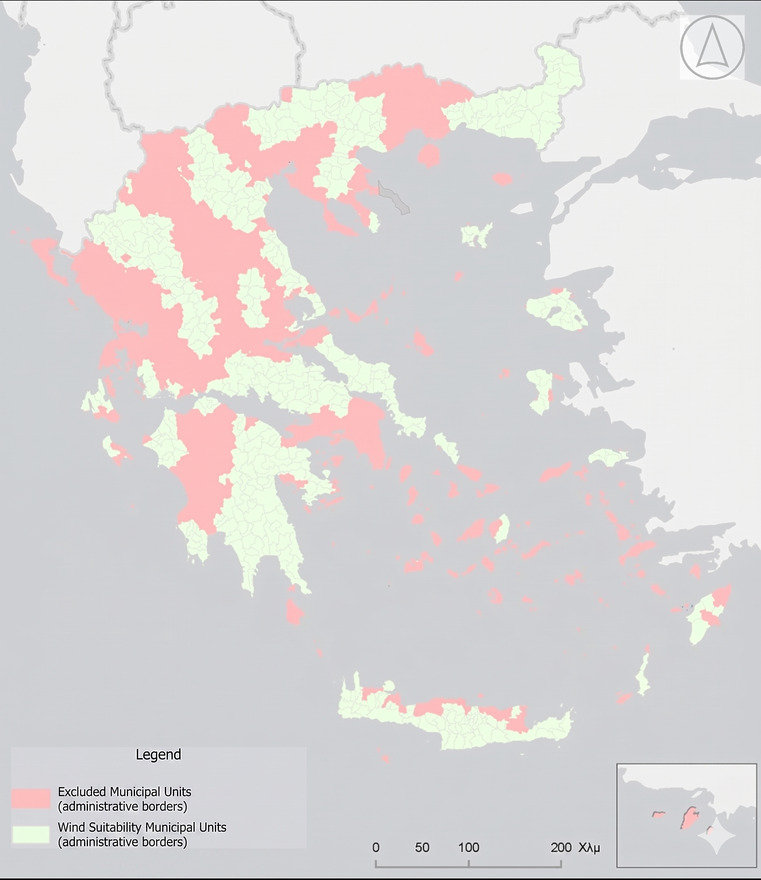
Regulatory Map of Wind Development Eligibility and Exclusion Zones across Greece
- Exemptions Regime
In order to ensure market stability, the following are explicitly exempted from the new prohibitions and zoning restrictions, remaining outside the scope of the new framework:
- Projects that are already operational or are at an advanced stage of licensing (projects for which a complete application file has already been submitted to the competent environmental authority for the issuance, renewal, or amendment of an Environmental Terms Approval).
- Small-scale RES installations that are generally exempt from ordinary licensing procedures.
- Photovoltaics installed on building rooftops.
- Large-scale hydroelectric projects and pumped-storage projects.
The public consultation process will run until June 24, 2026, at the following address: https://ypen.gov.gr/diavouleusi